 Pin It
 There's something about the sizzle of chicken hitting hot oil that makes me feel like I'm cooking something special, even when I'm just throwing together a weeknight dinner. Years ago, I watched a friend whip up a teriyaki bowl in what felt like no time at all, and the way that glossy sauce clung to every piece of chicken and vegetable made me realize I'd been overthinking Asian home cooking. That night, standing in her small kitchen with steam rising from the rice cooker, I understood that the best meals don't need to be complicated, just balanced and honest.
I remember making this for my partner on a Tuesday when we were both running on fumes, and somehow watching the vegetables turn bright and tender under the wok's heat felt like stopping time for just a moment. He sat at the counter grating ginger while I managed the sauce, and by the time we sat down with our bowls, the whole apartment smelled like garlic and possibility. That's when I realized this recipe wasn't just food—it was a way to say I'm here, let's slow down together.
Ingredients
- Boneless, skinless chicken thighs or breasts (500 g): Thighs stay juicier because they have more fat, but breasts work if that's what you have—just watch them so they don't dry out.
- Vegetable oil (2 tbsp total): Use it generously in two batches so everything gets a proper sear and the pan stays hot enough to finish the job.
- Salt and black pepper: A pinch of each before the chicken hits the oil makes all the difference in building flavor from the ground up.
- Soy sauce (80 ml): This is the backbone of your sauce, so taste your soy sauce first—some brands are saltier than others, and you might want to adjust later.
- Mirin (60 ml): It's the secret sweetness that tastes nothing like sugar, bringing a gentle gloss and depth that honey alone can't match.
- Honey or brown sugar (2 tbsp): Choose whichever you have on hand—honey melts in faster, brown sugar adds a deeper note.
- Rice vinegar (1 tbsp): This brightens everything and keeps the sauce from tasting flat or one-dimensional.
- Garlic and fresh ginger: Mince them fine so they dissolve into the sauce and flavor every bite evenly.
- Cornstarch slurry (1 tsp cornstarch mixed with 2 tsp water): This is what transforms runny sauce into something that clings to the chicken—don't skip it and don't add it before simmering.
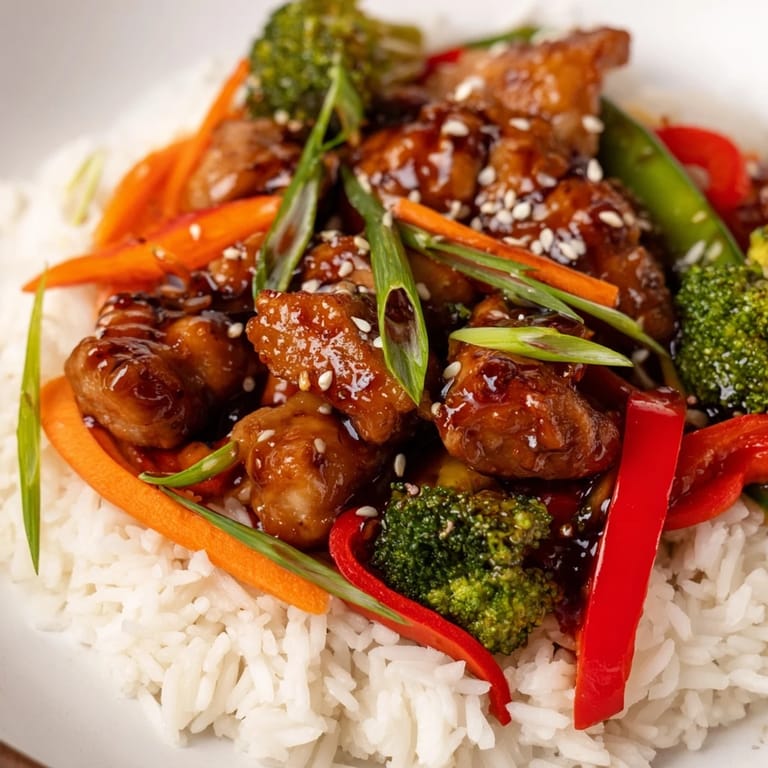
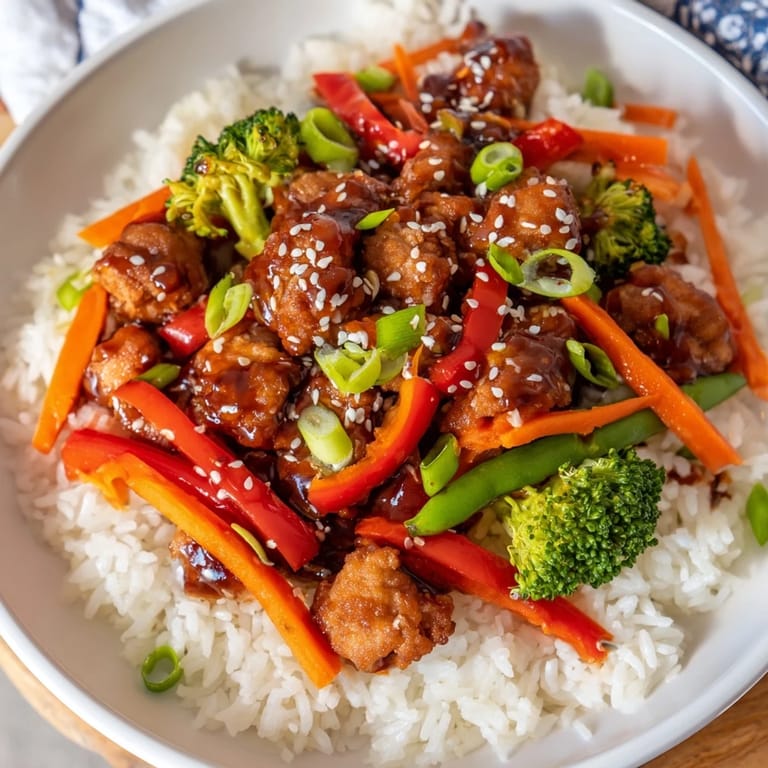
- Carrots, bell pepper, broccoli, sugar snap peas: These are your color and crunch; they should still have some bite when you pull them off the heat.
- Cooked white or brown rice (600 g): Make it a little wetter than you usually would so it soaks up the teriyaki sauce like a sponge.
- Sesame seeds and spring onions: These are your finishing touches—they add texture and a whisper of freshness that makes the whole bowl feel complete.
Tired of Takeout? 🥡
Get 10 meals you can make faster than delivery arrives. Seriously.
One email. No spam. Unsubscribe anytime.
Instructions
- Get your rice going first:
- Start your rice early so it's warm and waiting when everything else comes together. There's nothing worse than hot chicken sitting on cold rice.
- Build your teriyaki sauce:
- Combine soy sauce, mirin, honey, rice vinegar, garlic, and ginger in a small saucepan and let it simmer gently. When you stir in the cornstarch slurry, you'll feel it thicken almost instantly under your spoon—that's your cue that it's ready to go.
- Sear the chicken until it's golden:
- Get your oil hot enough that it shimmers, then add the salted and peppered chicken pieces. Let them sit for a moment before you move them so they develop that beautiful crust; this takes about 5 to 6 minutes total. You'll know it's ready when the outside is golden and a quick peek shows no pink inside.
- Stir-fry your vegetables quickly:
- Add fresh oil to the same pan, then toss in your vegetables in order of how long they take to cook—carrots first, then the others. You want everything to still have a little snap when you pull it off the heat, maybe 3 to 4 minutes of constant movement.
- Bring it all together with the sauce:
- Return the chicken to the pan, pour that glossy teriyaki sauce over everything, and toss gently so every piece gets coated. A minute or two of heat is all you need to make sure the chicken is warm and the sauce has soaked in.
- Assemble and serve:
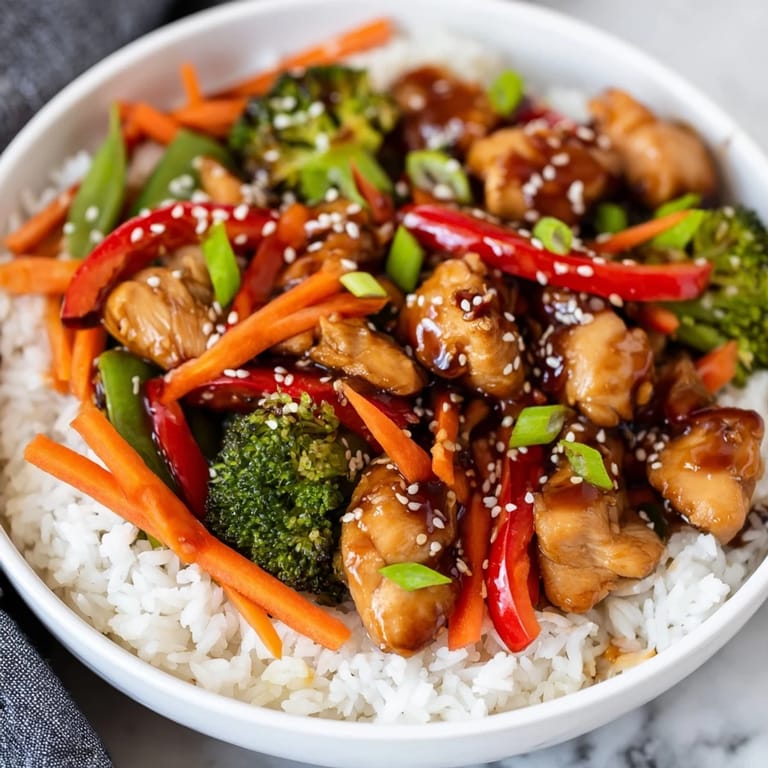
- Divide rice among four bowls, pile the chicken and vegetables on top, then scatter sesame seeds and sliced spring onions across the whole thing. This is when it stops being ingredients and starts being dinner.
 Pin It
 I made this for a small dinner party once, and what surprised me most wasn't how delicious it turned out, but how the whole table went quiet for those first few bites. That kind of silence around food means you've done something right. It reminded me that even the simplest recipes can feel like something you've been cooking for hours when you treat each step with a little intention.
Why Teriyaki Works Every Time
Teriyaki is one of those sauces that feels like magic because it balances sweet, salty, sour, and savory all at once, which is basically the formula for anything that makes you want another bite. The soy sauce gives you the salt and umami, mirin brings a subtle sweetness without tasting like dessert, rice vinegar wakes everything up, and the garlic and ginger add depth that keeps things from feeling one-dimensional. When you thicken it with cornstarch, it stops being a sauce that drips off and becomes something that actually stays where you want it.
The Vegetable Question
The vegetables in this bowl aren't just decoration—they're your contrast, your brightness, your reason to feel like you ate something wholesome. The snap of a sugar snap pea against the soft chicken, the slight earthiness of broccoli, the sweetness of carrots—it's all intentional. I used to throw in whatever was in the crisper drawer, and honestly, that still works fine because the teriyaki sauce is forgiving enough to make anything taste like it was supposed to be there.
Timing and Shortcuts That Actually Work
This meal comes together in about 35 minutes if you prep your ingredients before you start cooking, which is less time than it takes to sit in a restaurant waiting for your food. The rice cooker does its own thing while you're working on the rest, so you're really only managing the skillet and sauce at the same time. If you ever find yourself with 10 extra minutes, mince your garlic and ginger ahead of time—that's the one shortcut that really pays off.
- Pre-cut vegetables the night before and store them in containers so you're not racing against time on a weeknight.
- Make a double batch of teriyaki sauce and keep it in the fridge for the next time you need it.
- Brown rice takes longer than white, so plan accordingly or use a rice cooker that you can set and forget.
 Pin It
 This is the kind of recipe that lives in that perfect space between weeknight practicality and tasting like you actually know what you're doing. Make it once and it becomes part of your rotation, the meal you reach for when you want something that tastes like care in a bowl.