 Pin It
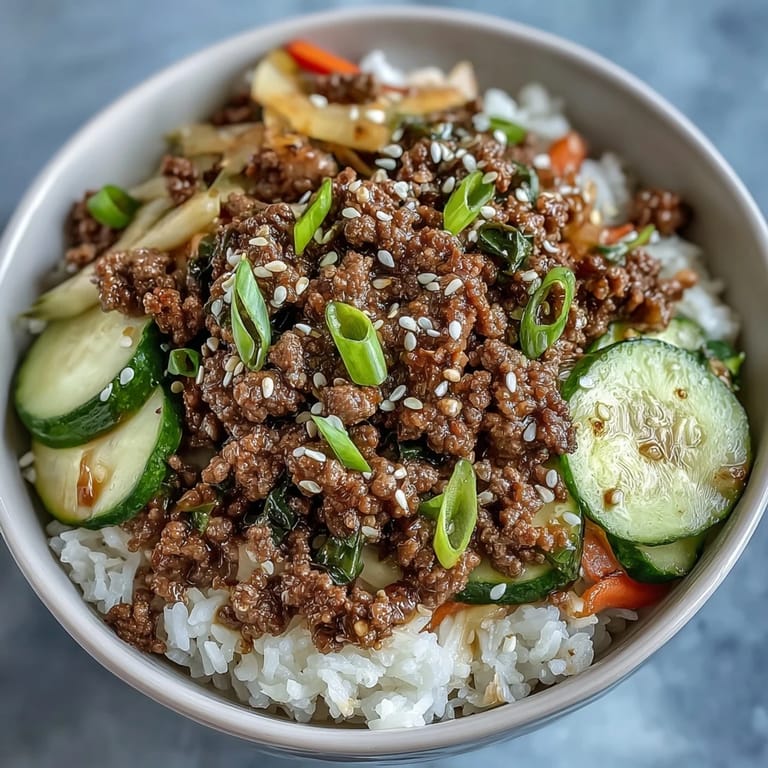
 My kitchen smelled like toasted sesame oil the afternoon I first assembled this bowl, and honestly, it was an accident born from leftover ground beef and a craving for something bright. I'd been scrolling through photos of Korean bibimbap when it hit me that I didn't need the complexity—just the soul of it, simplified into something I could make on a Tuesday night without stress. The pickled vegetables were my secret weapon, that tangy snap that makes everything else sing. Now it's become my go-to when I want something that feels restaurant-quality but takes less time than ordering delivery.
I made this for my partner one evening when they'd had a rough day, and watching them twirl the beef and vegetables together on their spoon while steam rose from the bowl—that's when I knew this recipe had staying power. They asked for it again the next week, and the week after that, and suddenly it became the dish I reach for when I want to show someone I care without making a fuss about it.
Ingredients
- Lean ground beef: 500 grams gives you enough to coat every bite of rice without heaviness, and lean means you're not draining pools of grease at the end.
- Soy sauce: Use tamari if gluten matters to you, and let me tell you, the quality difference shows in the final taste more than you'd think.
- Toasted sesame oil: This is non-negotiable—regular sesame oil just doesn't have that nutty depth that makes people ask what you did differently.
- Brown sugar: A tablespoon is enough to round out the saltiness without making it dessert, creating that perfect savory-sweet balance.
- Fresh ginger and garlic: Grating the ginger yourself rather than using jarred makes a genuine difference in freshness and bite.
- Gochujang: Optional heat that transforms the dish if you want it, but the recipe works beautifully without it too.
- Green onions: Split them between cooking and garnish so you get fresh bite in every spoonful.
- Sesame seeds: Toast them yourself if you have five minutes—it's a small step that elevates everything.
- Rice or cauliflower rice: Choose based on what your body and mood need that day; jasmine rice is my first choice for fragrance and texture.
- Quick pickled vegetables: The carrot, cucumber, and radish combination gives you color and three different textures that keep things interesting.
- Rice vinegar: It's gentler and brighter than other vinegars, which is why these pickles don't overpower the beef.
Tired of Takeout? 🥡
Get 10 meals you can make faster than delivery arrives. Seriously.
One email. No spam. Unsubscribe anytime.
Instructions
- Start with the pickles first:
- Whisk together the rice vinegar, sugar, and salt in a bowl until the crystals dissolve completely. Toss in your julienned carrots, sliced cucumber, and radish, then let them sit while you handle everything else—this waiting time is where the magic happens, the vegetables softening just slightly while soaking up that tangy brine.
- Get your rice ready:
- Whether you're cooking jasmine rice or cauliflower rice, have it done and warm by the time the beef hits the pan. If you're using regular rice, the starch and warmth are crucial for absorbing all those flavors when you mix everything together.
- Brown the beef with intention:
- Heat your skillet over medium-high and add the ground beef, breaking it apart with your spoon as it cooks. You're looking for that moment when it's no longer pink and the edges start to caramelize slightly, which takes about 5 to 7 minutes—don't rush this, because those browned bits are where flavor lives.
- Build the sauce:
- Once the beef is cooked through, drain any excess fat if there's a pool of it, then add the soy sauce, sesame oil, brown sugar, ginger, garlic, and gochujang if you're using it. Stir constantly for 2 to 3 minutes so the mixture becomes aromatic and slightly glossy, coating every piece of beef evenly.
- Finish with freshness:
- Remove from heat and fold in the sliced green onions and sesame seeds, which stay brighter when they're not cooked further. The residual heat is enough to warm them through without losing their punch.
- Assemble your bowls:
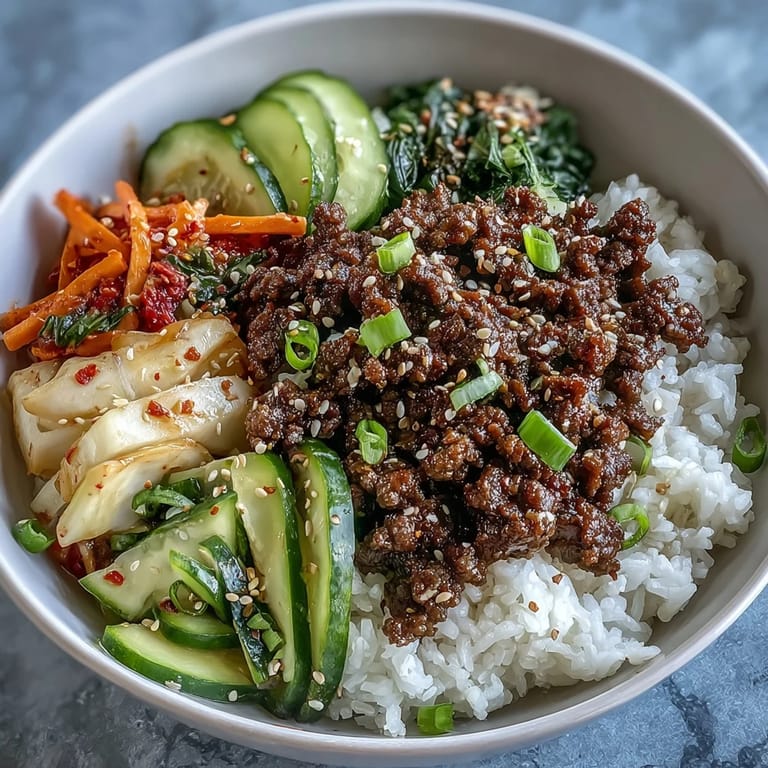
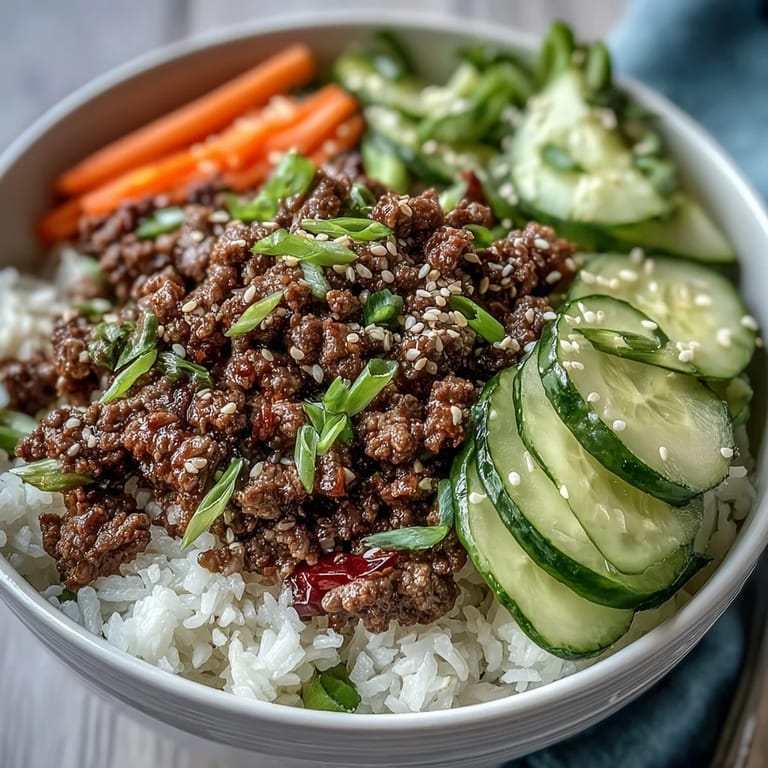
- Divide the rice among your bowls, top generously with the seasoned beef, then pile on the pickled vegetables—don't be shy with them, as that acidic snap is half the story.
- Garnish and serve:
- Sprinkle more green onions and sesame seeds on top for texture and visual appeal, then eat while everything is still warm and the rice is still steaming.
 Pin It
 There's a moment after you've assembled the bowl and you sit down to eat it, when you take that first forkful and everything clicks—the warm rice, the savory beef, the cool pickled vegetables creating this symphony of temperature and texture. That's the moment that keeps me coming back to this recipe, because it's simple enough to make on a weeknight but feels special every single time.
Customization is Your Superpower
This bowl is a canvas, and I've learned that the best part about it is how forgiving it is to personal preference. Swap the beef for ground turkey or chicken and it's leaner but still deeply satisfying; use crumbled tofu or tempeh and you've got something completely plant-based that doesn't feel like you're missing anything. One evening I topped mine with a fried egg just because I had one in the fridge, and suddenly it became elevated into something richer and more luxurious. The beauty here is that you're in control—build it for what you need that day.
The Cauliflower Rice Question
I used to think cauliflower rice was a compromise, something you ate because you had to rather than because you wanted to. Then I made this bowl with it on a day when I was trying to be kinder to my body, and I realized the pickled vegetables and the rich beef actually taste better when they're not competing with heavier carbs for your attention. The nutritional difference is real, and the meal is somehow more satisfying even though it's technically lighter—which honestly blew my mind the first time I noticed it.
Pro Tips and Final Thoughts
Over time I've picked up little tricks that make this dish even better, small adjustments that come from cooking it dozens of times and paying attention to what actually matters.
- Toast your sesame seeds in a dry skillet for about a minute before using them, which brings out a nuttiness that feels like a revelation if you've never done it.
- Make extra pickled vegetables and keep them in the fridge for up to a week—they're incredible on rice bowls, tacos, sandwiches, or straight from the jar as a snack.
- If you want to meal prep this, cook the beef and rice ahead, keep them separate in the fridge, and assemble with fresh pickled vegetables and garnishes when you're ready to eat.
 Pin It
 This bowl has become my answer to those nights when I want something restaurant-quality but refuse to spend an hour cooking or a fortune ordering out. It's proof that simplicity done well beats complexity every single time.
Recipe FAQs
- → What type of rice can I use for this bowl?
You can use jasmine rice for a traditional base or cauliflower rice for a low-carb alternative.
- → Can I substitute the beef with other proteins?
Yes, ground turkey or chicken can replace beef, and tofu or tempeh are great vegetarian options.
- → How long should I marinate the pickled vegetables?
Let the pickled carrots, cucumbers, and radish sit for at least 15 minutes to develop bright, tangy flavors.
- → Is gochujang essential for the flavor?
Gochujang adds authentic heat and depth but can be substituted with sriracha or omitted if preferred.
- → What garnishes enhance the dish’s flavor?
Extra sliced green onions and toasted sesame seeds provide a fresh crunch and nutty aroma.
- → How can I make this bowl gluten-free?
Use tamari instead of soy sauce and verify the gochujang label for gluten-free certification.