 Pin It
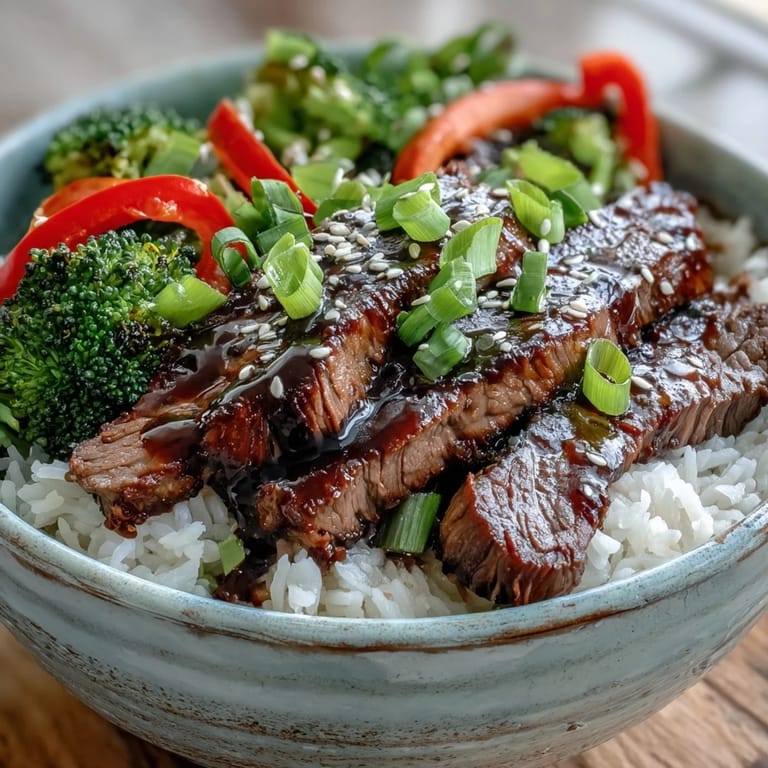
 My coworker handed me a takeout container one Tuesday afternoon, steam rising off a bowl of glossy beef and vegetables, and asked why I kept ordering the same thing every week. That question stuck with me, so I went home and tried to recreate it, thinking it couldn't be that complicated. Turns out, the magic was in the sauce—that perfect balance of sweet and savory that makes you want to eat faster than you should. Now I make it constantly, and it's become the kind of meal that feeds me when I need something reliable but still feels like a treat.
I made this for my sister during a busy week when she was too exhausted to cook, and watching her close her eyes after that first bite reminded me why I love feeding people. She asked for the recipe the next day, and now it's become our thing to text about when life gets overwhelming. There's something grounding about a bowl this comforting, something that says you're worth the effort even on your worst days.
Ingredients
- Flank steak or sirloin, thinly sliced: Cut against the grain so each piece melts on your tongue; I learned this the hard way after one particularly chewy attempt, and it changed everything.
- Cornstarch for beef: This creates a delicate crust that keeps the meat tender inside while giving the sauce something to cling to.
- Soy sauce: The backbone of teriyaki; don't skimp on quality here because you'll taste the difference immediately.
- Mirin: This sweet rice wine is what separates real teriyaki from something just salty and thin.
- Honey or brown sugar: Adds depth beyond just sweetness, rounding out the umami punch.
- Rice vinegar: A small splash that brightens everything and keeps the sauce from feeling heavy.
- Fresh garlic and ginger: Minced fresh, not powdered—the difference in a bowl this simple is massive.
- Cornstarch slurry: The secret to sauce that clings instead of sliding off; whisk it in at the end for a glossy finish.
- Carrots and bell pepper: Cut thin so they stay crisp and don't overpower the beef.
- Broccoli florets: They should be small enough to eat easily from a bowl, and they'll soften just enough in the sauce.
- Spring onions and sesame seeds: These are the final flourish that make it feel intentional, not rushed.
- Cooked rice: Warm rice is essential; cold rice won't absorb the sauce properly.
Tired of Takeout? 🥡
Get 10 meals you can make faster than delivery arrives. Seriously.
One email. No spam. Unsubscribe anytime.
Instructions
- Make the sauce first:
- Combine soy sauce, mirin, honey, rice vinegar, garlic, and ginger in a small saucepan and bring to a simmer over medium heat. The kitchen will smell incredible—like you're doing something intentional. Whisk in your cornstarch slurry and let it bubble gently for 2 to 3 minutes until it thickens enough to coat the back of a spoon, then set it aside to cool slightly.
- Prepare the beef:
- Toss your thinly sliced beef with cornstarch until every piece is lightly coated; this helps it stay tender and gives the sauce grip. Don't skip this step even though it seems fussy.
- Sear the meat:
- Heat oil in a large skillet or wok over high heat until it shimmers, then add the beef in a single layer if you can manage it. Let it sit for a moment so it browns instead of steams, then stir and cook for 2 to 3 minutes total until it's golden and just cooked through. Remove it to a plate while you finish the vegetables.
- Stir-fry the vegetables:
- Using the same skillet with all those beef drippings still clinging to it, add your carrots, bell pepper, and broccoli and stir constantly for 3 to 4 minutes. You want them to soften slightly but still have some snap when you bite them.
- Bring it together:
- Return the beef to the skillet, pour the sauce over everything, and toss gently so each piece gets coated in that glossy richness. Heat through for just 1 minute—you're not cooking anymore, just warming.
- Plate and garnish:
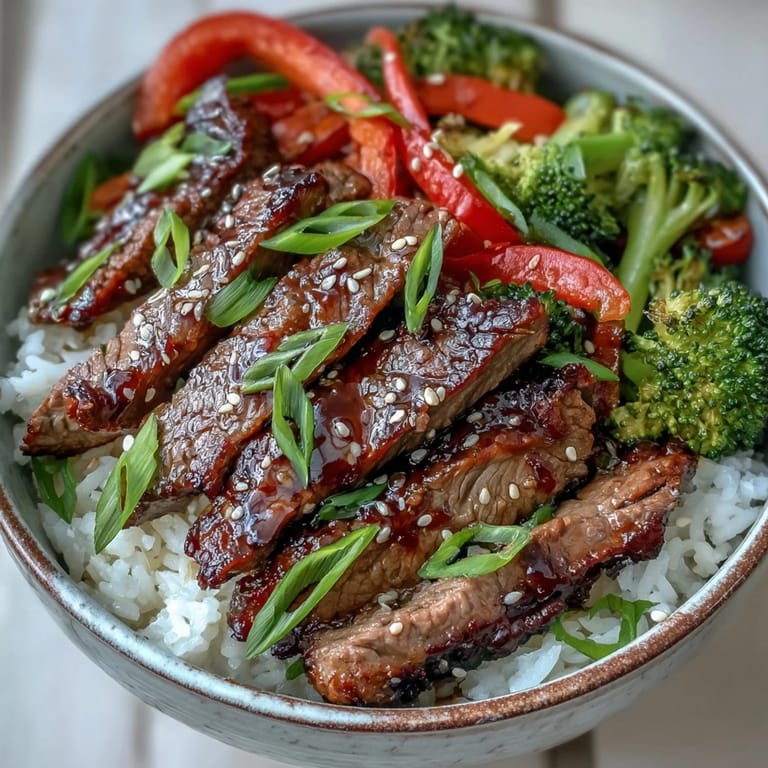
- Divide hot rice among bowls, top with the beef and vegetables, and finish with sliced spring onions and a sprinkle of sesame seeds. Eat it right away while the rice is still steaming and the sauce is still warm.
 Pin It
 There's a moment after everything hits the bowl, when you pour that sauce and it catches the light, when the rice steams up into your face and you know you made something worth making. That's when I remember why I keep coming back to this recipe, why it's become one of those meals that feels like both comfort and accomplishment at once.
The Teriyaki Sauce Secret
The sauce is where all the magic lives, and I learned this by tasting every component separately one curious evening. The mirin adds sweetness but not in a candy way—it's rounded and complex, the kind of sweetness that makes your mouth water for more. When you add the cornstarch slurry at the end, watch for that moment when the sauce stops looking watery and turns glossy and thick; that's when you know you've got it right, and it happens faster than you'd think.
Beef Selection Matters
Flank steak and sirloin both work beautifully here because they're lean enough to cook quickly but have enough texture to stay interesting. The thinness is what matters most—I use a sharp knife and take my time slicing, making sure each piece is uniform so they all cook at the same rate. Uneven pieces lead to some being overcooked while others are still chewy, which defeats the whole purpose of something this simple.
Building Your Bowl
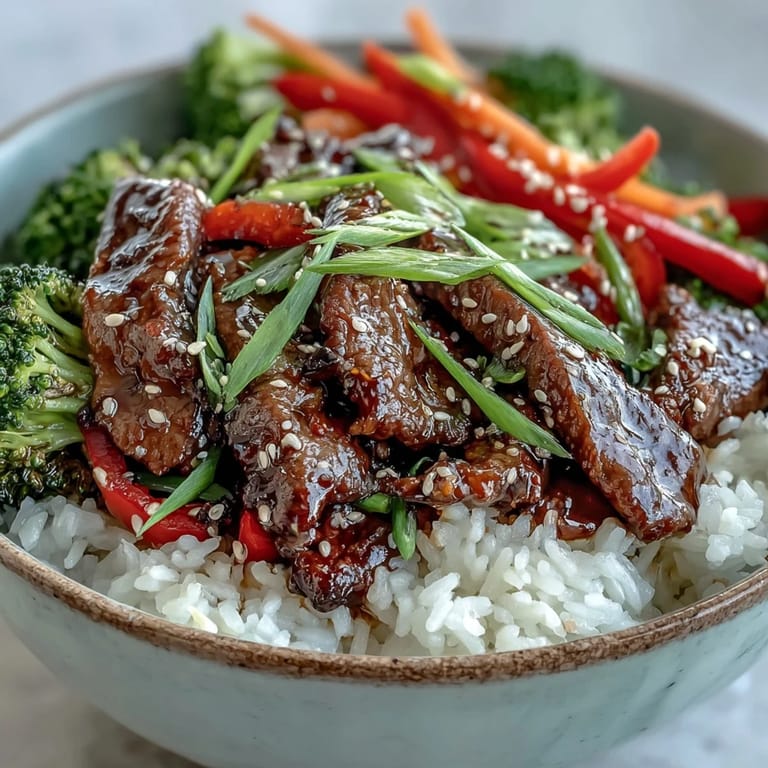
The order of assembly matters more than you might think, and I've learned this through trial and error across dozens of bowls. Warm rice first, then hot vegetables and beef, so everything stays at the right temperature when you sit down to eat. The garnish of fresh spring onions and sesame seeds isn't just decoration—the onions add a bright bite that cuts through the richness, and the sesame seeds give you something to bite through for texture.
- Always taste the sauce before pouring it over everything; you might want it saltier or sweeter depending on your soy sauce brand.
- If you're making this for guests, prep all your ingredients in advance so the cooking part feels easy and confident.
- Leftovers reheat beautifully in a pan with a splash of water, though the vegetables will soften more than fresh.
 Pin It
 This is the kind of recipe that rewards you immediately, that turns an ordinary Tuesday into something worth sitting down for. Once you make it, you'll understand why it became my go-to, and why I keep coming back to it.
Recipe FAQs
- → What cut of beef works best?
Flank steak or sirloin are ideal choices because they're lean and slice beautifully into thin strips. Look for beef with good marbling to ensure tenderness. Slice against the grain for the most melt-in-your-mouth results.
- → Can I make the teriyaki sauce ahead?
Absolutely. The sauce keeps well in the refrigerator for up to two weeks. Store it in an airtight container and reheat gently when ready to use, whisking in a splash of water if it has thickened too much.
- → How do I get the sauce thick and glossy?
The cornstarch slurry is key. Whisk equal parts cornstarch and cold water until smooth, then slowly drizzle into the simmering sauce while constantly stirring. Let it bubble for 2-3 minutes until it coats the back of a spoon.
- → What vegetables can I substitute?
Snap peas, edamame, shiitake mushrooms, or baby corn all work wonderfully. Feel free to use whatever crisp vegetables you have on hand. The key is cutting them into similar sizes so they cook evenly.
- → Is this gluten-free?
It can be. Simply replace regular soy sauce with tamari or a certified gluten-free soy sauce alternative. All other ingredients including the beef, vegetables, and rice are naturally gluten-free.