 Pin It
 I first tasted Baja fish tacos at a tiny taquería run by a woman who'd been frying fish the same way for thirty years—the batter crackled between my teeth, and the lime sauce hit like a bright surprise. That moment stuck with me, and years later, I finally figured out her secret: sparkling water in the batter and never, ever skipping the chill on the sauce. Now when I make them at home, I'm right back on that dusty street corner, salt air and all.
I made these for my neighbors during a heatwave last summer, and we ate them standing up in the backyard with our feet in the grass, talking until the light turned orange. One of them asked for the recipe right there, mid-bite, which is the highest compliment I know.
Ingredients
- Firm white fish fillets: Cod and halibut are forgiving—they stay tender and flaky even if you fry them a touch too long, which I always manage to do.
- Cornstarch: This is the silent hero; it's what makes the batter shatter instead of just getting crispy.
- Baking powder: It lightens the batter and creates those tiny air pockets that catch the oil just right.
- Cold sparkling water: Room-temperature water makes a heavy batter, but the cold carbonation keeps it delicate and airy.
- Fresh lime juice and zest: Don't use bottled—the difference is the whole point of that sauce.
- Mayonnaise and sour cream base: The sour cream keeps the sauce from being too heavy, and the mayo gives it body.
- Green cabbage: It stays crisp longer than red and doesn't bleed color all over everything.
- Corn tortillas: They're sturdier than flour tortillas and actually taste like something.
- Vegetable oil: Use something neutral; olive oil burns and gets bitter at frying temperature.
Tired of Takeout? 🥡
Get 10 meals you can make faster than delivery arrives. Seriously.
One email. No spam. Unsubscribe anytime.
Instructions
- Make the lime sauce first:
- Mix mayonnaise, sour cream, minced garlic, fresh lime juice, and zest in a small bowl—taste it and add salt, pepper, and hot sauce until it sings. Let it sit in the cold while you work; the flavors settle and deepen.
- Build your dry mixture:
- Whisk together flour, cornstarch, baking powder, salt, garlic powder, paprika, and black pepper in a large bowl. The cornstarch needs to be fully distributed, so really work it in.
- Heat your oil carefully:
- Pour about an inch of vegetable oil into a deep skillet and watch the thermometer until it hits 350°F—too hot and the outside burns while the fish stays cold inside; too cool and it soaks up oil like a sponge.
- Prep the fish:
- Pat the fillets completely dry with paper towels—any moisture will make the batter slip right off. Cut them into strips that are thick enough to handle but not so big they stay raw in the center.
- Create the batter:
- Pour cold sparkling water into the dry mixture and whisk until it's smooth and pourable, like thin pancake batter. Don't overmix; a few lumps are fine and actually keep it tender.
- Fry with intention:
- Dredge each fish strip lightly in flour, shake off the excess, then dip it in batter and let the drips fall back into the bowl before it hits the oil. Fry in batches—don't crowd the pan or the temperature drops and everything steams instead of fries. Turn once, about three to four minutes per side, until the batter is deep golden and crisp.
- Drain and rest:
- Use a slotted spoon to pull the fish out and lay it on a wire rack or paper towels. Don't skip this step; it lets the steam escape instead of turning your crispy treasure soggy.
- Warm your vessels:
- Toast the tortillas in a dry skillet for just a few seconds per side, or wrap them in foil and warm them in the oven. They should be pliable but still have some body.
- Assemble with care:
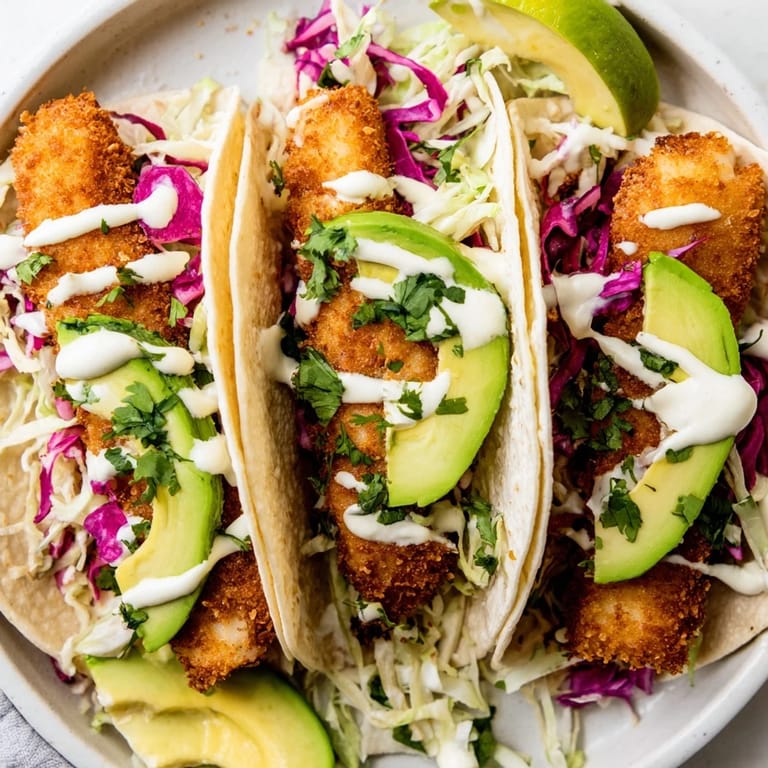
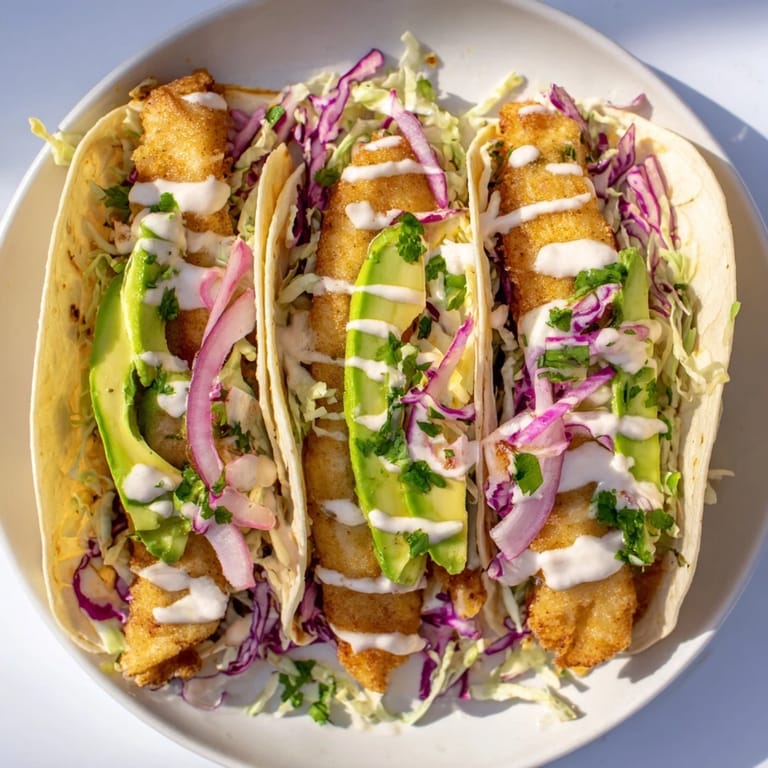
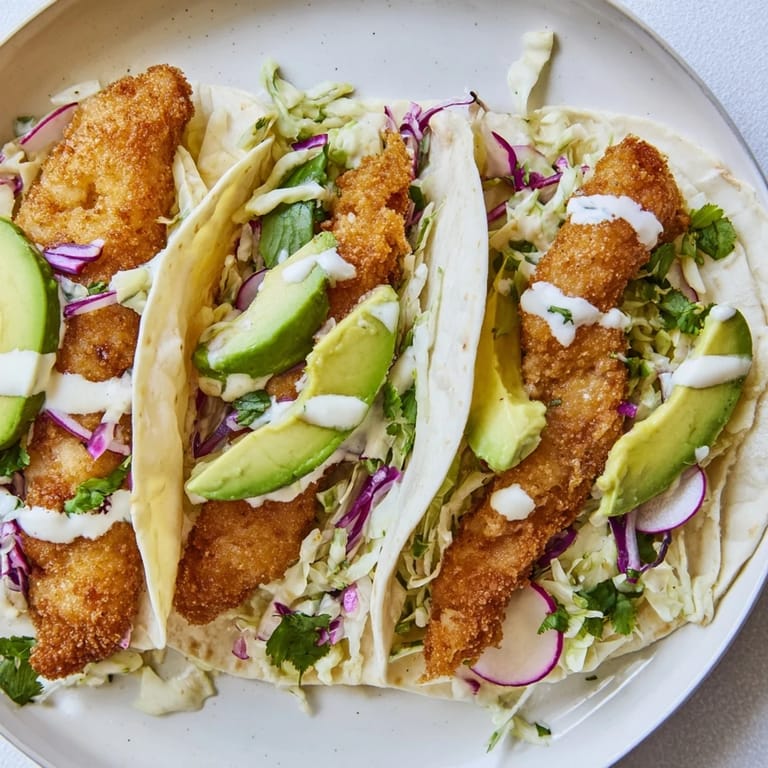
- Lay out the fish, crispy and still warm, on each tortilla. Add cabbage, cilantro, red onion, and avocado slices, then drizzle generously with that lime sauce you made hours ago. Squeeze a lime wedge over everything and eat immediately.
 Pin It
 There's a moment when everything comes together—the crisp of the batter, the cool avocado, the bright acid of the lime, the tender fish—and you understand why people travel thousands of miles just to eat on a beach. You don't need to be on a beach to have that moment.
The Secret of Crispy Batter
Most batters fail because people use warm water and wonder why their coating gets soggy. The cold sparkling water isn't just a detail—it's the difference between a taco that shatters when you bite it and one that's limp by the time you reach the plate. The carbonation creates tiny bubbles that fry into air pockets, which means the batter stays crisp even when you load it with toppings. I learned this by accident when someone dropped a can of seltzer into my mixing bowl, and I was too frustrated to start over.
Why This Sauce Changes Everything
A Baja fish taco without this lime sauce is just a fried fish sandwich. With it, the whole thing becomes electric. The sour cream keeps it from being too heavy, the garlic gives it backbone, but the lime juice and zest are what make people ask for seconds. I've tried shortcutting it with store-bought lime aioli, and it's never the same—the salt content is wrong, and there's no brightness, just flatness. Fresh lime, fresh garlic, five minutes with a bowl and a whisk—that's the move.
Building the Perfect Taco
The order matters, though nobody tells you this. Fish first, while it's still warm, so it stays crispy. Cabbage second, because it acts as a barrier between the heat and the delicate toppings. Then cilantro and onion for bite and freshness, then avocado, which should go on last so it doesn't get crushed. The sauce goes last too, drizzled just before you eat it. I learned the hard way that if you sauce everything and then walk away to get a drink, you've got a soggy situation on your hands.
- Use a warm tortilla, not a cold one—it wraps better and stays flexible.
- Don't oversaturate with toppings or the whole thing falls apart the moment you lift it.
- Eat it standing up or over a plate, because there will be drips, and that's part of the charm.
 Pin It
 These tacos taste like a moment that mattered, even when you're making them on a random Tuesday in your own kitchen. Make them when you want to remember what it feels like to eat something that tastes like somewhere else.
Recipe FAQs
- → What type of fish works best?
Firm white fish such as cod, halibut, mahi-mahi, or tilapia provide the best texture and flavor for frying.
- → How do I keep the batter crispy?
Use cold sparkling water in the batter and fry at a steady medium-high heat to ensure a light, crisp coating.
- → Can the fish be baked instead of fried?
Yes, baking at 425°F (220°C) on a lined tray with a touch of oil will yield a crisp finish with less oil.
- → What adds crunch to the topping?
Finely shredded green and red cabbage offer a refreshing crunch that complements the tender fish.
- → How is the creamy lime sauce prepared?
The sauce blends mayonnaise, sour cream, fresh lime juice, zest, garlic, and optional hot sauce, chilled to meld flavors.