 Pin It
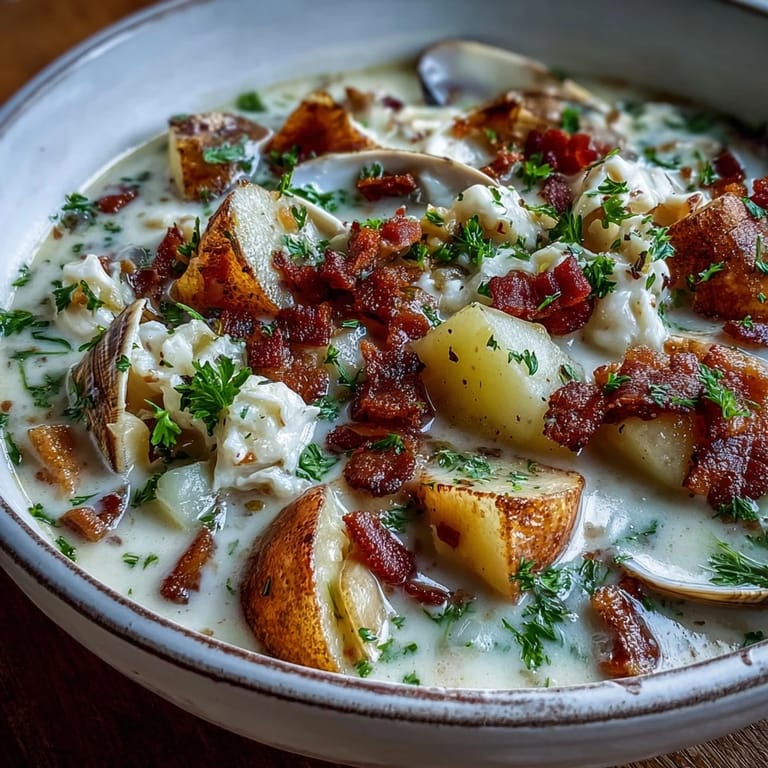
 The steam fogging up my kitchen windows on a gray February afternoon, that rich aroma hitting me before I even took off my coat—that is my strongest memory of my grandmother's clam chowder. She'd been making it the same way for forty years, and I'd finally convinced her to teach me. The secret, she whispered conspiratorially, was patience and never rushing the roux.
I made this for a snowed-in weekend last winter, watching my friends' eyes widen when they took their first spoonful. Someone actually said it tasted like a coastal restaurant spent hours on it, which made me silently thank my grandmother for every detail she insisted mattered.
Ingredients
- Fresh clams or canned clams: Fresh littlenecks give superior sweetness, but high-quality canned clams work beautifully in a pinch
- Salt pork or thick-cut bacon: This renders into the essential fat base that carries all the other flavors
- Yukon Gold potatoes: They hold their shape better than russets and add a naturally buttery taste
- Heavy cream and whole milk: The combination creates richness without overwhelming the delicate clam flavor
- Clam juice: Bottled clam juice provides consistent brininess and serves as the soup's foundation
- Bay leaf and thyme: These aromatic herbs layer in background notes that make the chowder taste complete
Tired of Takeout? 🥡
Get 10 meals you can make faster than delivery arrives. Seriously.
One email. No spam. Unsubscribe anytime.
Instructions
- Prepare the clams:
- Scub fresh clams thoroughly, then steam them in a covered pot with water until shells pop open. Strain and save every drop of that precious cooking liquid before chopping the meat.
- Render the salt pork:
- Cook diced salt pork or bacon in your Dutch oven until crisp and fat has rendered, then remove the meat but keep all that golden fat in the pot.
- Build the vegetable base:
- Melt butter into the rendered fat and sauté onion and celery until soft and fragrant, then add garlic for just sixty seconds.
- Create the roux:
- Sprinkle flour over the vegetables and stir constantly for two minutes, cooking out the raw flour taste until the mixture smells nutty.
- Add the liquids:
- Whisk in clam juice, milk, and cream gradually, stirring vigorously to prevent any lumps from forming.
- Simmer the potatoes:
- Add potatoes, bay leaf, and thyme, then simmer until potatoes are tender when pierced with a fork.
- Finish with clams:
- Gently fold in chopped clams and reserved salt pork, simmering just long enough to heat everything through without boiling.
 Pin It
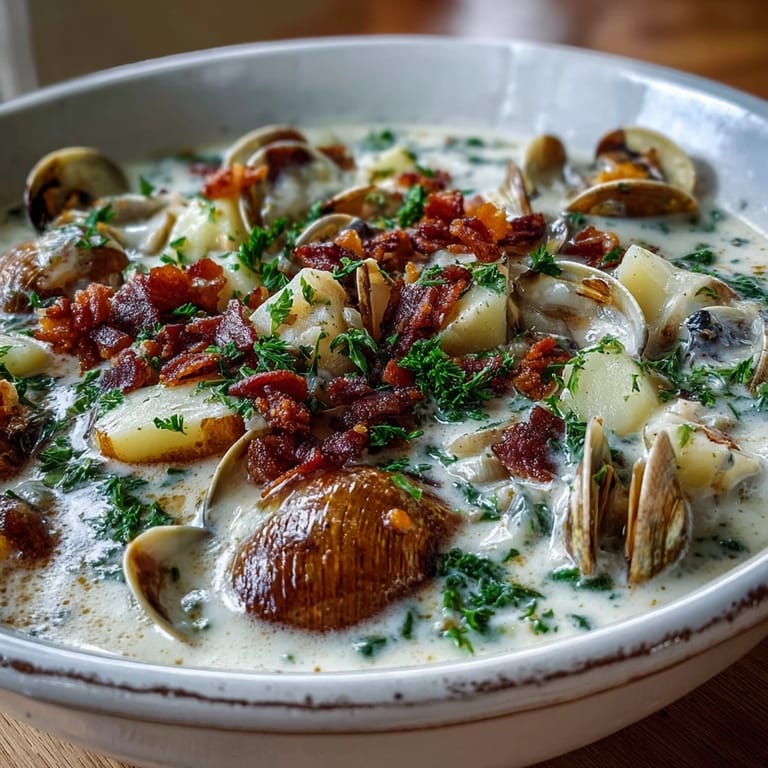
 My grandfather used to sit at the kitchen table while this simmered, occasionally rising to sneak a taste with a wooden spoon. Perfect is what he would declare, and I finally understood what he meant the first time I made it entirely on my own.
Making It Lighter
Half-and-half creates a surprisingly satisfying version if you are watching the richness. I have found that increasing the clam juice slightly compensates for any depth lost from reducing the cream.
The Bread Question
Oyster crackers are traditional, but a crusty sourdough for dipping transforms this into a complete meal. Toasted baguette slices also work beautifully for soaking up every last drop.
Make-Ahead Magic
This chowder actually tastes better the next day when all the flavors have had time to marry together. Store it in the refrigerator and reheat gently over low heat, stirring occasionally.
- Hold off adding the final parsley garnish until serving
- The soup will keep for three days in the refrigerator
- Freezing works but the texture may change slightly
 Pin It
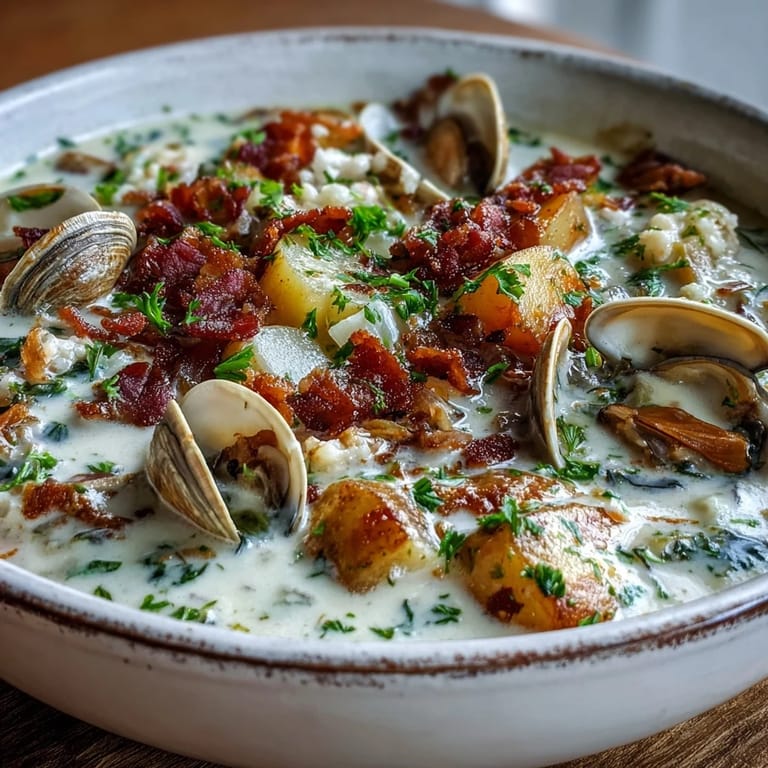
 There is something deeply satisfying about a steaming bowl of chowder, especially when you know you made it yourself.
Recipe FAQs
- → What makes this chowder authentic New England style?
True New England chowder features a creamy milk-based broth rather than the tomato-based version found in Manhattan. The combination of salt pork, fresh clams, potatoes, and cream creates that signature rich, white chowder that's been a Northeast staple for generations.
- → Can I use canned clams instead of fresh?
Absolutely. Canned chopped clams work beautifully and actually save significant prep time. Use the juice from the can as part of your clam juice measurement—it adds essential flavor. Just reduce the simmering time slightly since canned clams are already tender.
- → Why shouldn't I boil the chowder after adding cream?
High heat causes dairy proteins to separate, leading to a grainy or curdled texture. Gentle simmering keeps the broth smooth and velvety. If you need to reheat leftovers, do so slowly over low heat, stirring constantly.
- → What's the purpose of the flour in this preparation?
The flour creates a roux when cooked with the butter and vegetables, which thickens the broth and prevents the cream from separating. This technique gives the chowder its characteristic body and helps the flavors cling to each ingredient.
- → How long does this chowder keep in the refrigerator?
Properly stored in an airtight container, this chowder keeps for 3-4 days. The flavors actually improve overnight. Reheat gently over low heat, adding a splash of milk or cream if it seems too thick. Avoid freezing, as the dairy may separate upon thawing.
- → What can I serve alongside this chowder?
Oyster crackers are the traditional accompaniment—their salty crunch pairs perfectly with the creamy soup. Crusty bread, buttery biscuits, or a simple green salad with vinaigrette also work well. A crisp Sauvignon Blanc cuts through the richness beautifully.