 Pin It
 There's something wonderfully satisfying about sliding a sheet pan into the oven and walking away knowing dinner is already half done. One Thursday evening, I was staring at a salmon fillet and some forgotten vegetables in my crisper drawer, feeling uninspired but hungry. Twenty-five minutes later, the kitchen smelled like roasted lemon and caramelized peppers, and what started as a quick fix became the meal I now make at least twice a month.
I served this to my sister during a busy weeknight when she was stressed about meal planning for her family. Watching her kids actually eat the vegetables without complaining was a small victory, and she texted me the recipe request before she even left the kitchen. Now it's become her go-to when she needs to prove to herself that healthy eating doesn't require hours of work.
Ingredients
- Salmon fillets (4, about 5–6 oz each): Look for fillets that are firm and smell like the ocean, not fishy, and pat them completely dry before seasoning so they crisp up nicely in the oven.
- Olive oil: Use a good quality oil you'd actually taste on its own, since there's nothing hiding the flavor here.
- Lemon zest: Fresh zest makes all the difference—a microplane grater gets you the most fragrant result without the bitter white pith.
- Red onion: Cut into wedges so the layers stay intact and caramelize instead of turning into individual sad pieces.
- Carrots: Slice them thin enough to cook through in 25 minutes, but thick enough to have some texture when they're done.
- Bell peppers (red and yellow): Any color works, but these two together are bright and slightly sweeter than green, which I find more appealing when roasted.
- Zucchini: Half-moon slices prevent the pieces from tipping over and burning, and they release less water this way.
- Cherry tomatoes: Halved so they burst slightly and release their juices into the pan, creating little flavor pockets.
- Italian herbs: Dried works perfectly here since the oven heat brings out the flavor, and honestly, it's more reliable than fresh herbs that might wilt.
- Fresh parsley: Chopped at the very end, it adds a bright, fresh note that balances the warm roasted flavors.
Tired of Takeout? 🥡
Get 10 meals you can make faster than delivery arrives. Seriously.
One email. No spam. Unsubscribe anytime.
Instructions
- Set your oven to hot and prep your stage:
- Preheat to 425°F and line a large sheet pan with parchment paper or foil—this prevents sticking and makes cleanup genuinely effortless. A large pan matters here because crowding everything will steam instead of roast.
- Season and spread your vegetables:
- Toss the onion, carrots, peppers, zucchini, and tomatoes with olive oil, herbs, salt, and pepper in a big bowl, then spread them in a single layer on your sheet pan. This early seasoning means the flavors meld while everything cooks.
- Give the vegetables a head start:
- Roast for 10 minutes alone—carrots and onions need this extra time to begin softening before the salmon joins them. You'll notice the onion starting to turn translucent at the edges when you check.
- Prepare the salmon while vegetables roast:
- Pat the fillets completely dry with paper towels, brush with olive oil, and sprinkle generously with lemon zest, salt, and pepper. Dryness is the secret to crispy edges, so don't skip the patting step.
- Make room and add the star:
- Remove the pan, nestle the salmon fillets among the vegetables, then return to the oven. The hot vegetables will keep cooking while the salmon gently roasts around them.
- Cook until everything reaches perfect doneness:
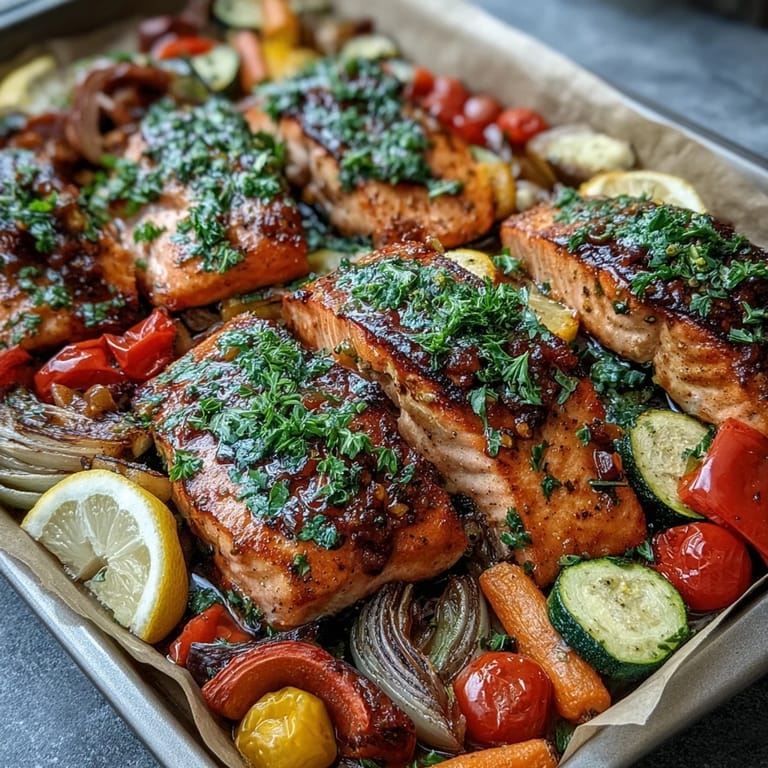
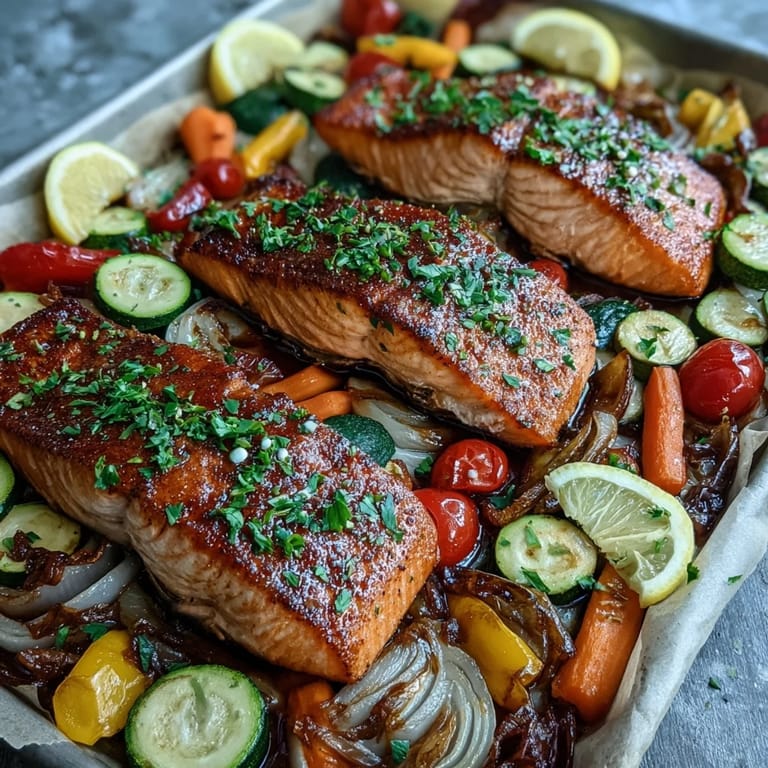
- Roast for 12–15 minutes more—the salmon should flake easily with a fork and the vegetables should be tender with caramelized edges. Cooking time varies based on fillet thickness, so check at 12 minutes and don't panic if it needs a couple more.
- Finish with brightness and serve:
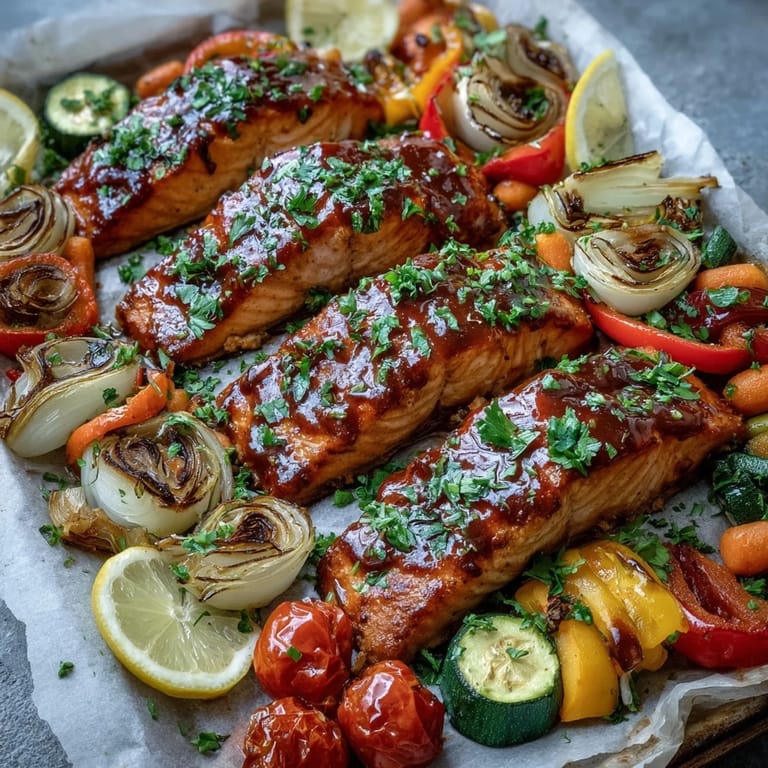
- Sprinkle fresh parsley over everything and serve with lemon wedges so people can squeeze exactly as much as they like. The parsley adds a fresh herbal note that cuts through the richness beautifully.
 Pin It
 Last month, a friend who claims to hate salmon came over and ate almost an entire fillet, then asked for the recipe with genuine surprise in her voice. She'd thought she didn't like salmon because she'd only had it overcooked or drowned in heavy sauces—this version changed her mind in one bite. That moment reminded me why simple cooking, done well, is sometimes the most powerful kind.
Why Sheet Pan Cooking Changed My Weeknights
There's a real magic in one-pan cooking that goes beyond just fewer dishes to wash. Once you understand that roasting everything together at a high temperature creates its own sauce from vegetable juices and caramelization, you stop needing complicated techniques. The oven becomes your assistant, and you're free to set a table, pour a drink, or just breathe for a moment while dinner finishes itself.
Vegetable Swaps and Seasonal Thinking
This recipe is forgiving about vegetables in a way that lets you cook with whatever looks good at the market. In spring, I use asparagus and snap peas; in summer, I go heavier on the tomatoes and zucchini; by fall, thick-cut sweet potatoes and Brussels sprouts get the treatment. The cooking time might shift slightly based on what you choose, but the fundamental method stays exactly the same, which is honestly the point.
Making It Feel Like a Celebration, Not Just Dinner
This dish sits at that sweet spot where it feels simple enough for a Tuesday but special enough for hosting. I've paired it with a crisp Sauvignon Blanc, a drizzle of aged balsamic, or even a light crumble of feta cheese when I wanted to dress it up slightly. The base recipe is so clean and honest that additions feel like choices rather than cover-ups.
- A squeeze of fresh lemon and good sea salt is honestly all the finishing you ever really need.
- If you're cooking for someone with dietary restrictions, this naturally gluten-free and dairy-free meal handles that with zero compromise on flavor or satisfaction.
- Make extra vegetables and eat them cold the next day over salad or grain bowls—they taste even better when the flavors have settled overnight.
 Pin It
 This recipe teaches you that the best meals don't require fancy techniques or impossible-to-find ingredients—just respect for good ingredients and enough heat to let them shine. Come back to it whenever you need dinner that tastes like you tried harder than you actually did.
Recipe FAQs
- → What temperature should the oven be set to?
Preheat your oven to 425°F (220°C) for optimal roasting. This high heat ensures the vegetables caramelize nicely while the salmon cooks through without drying out.
- → How do I know when the salmon is done?
The salmon is ready when it flakes easily with a fork and reaches an internal temperature of 145°F (63°C). The flesh should be opaque and slightly pink throughout, taking about 12-15 minutes in the oven.
- → Can I use other vegetables?
Absolutely. Swap in seasonal vegetables like asparagus, broccoli florets, sweet potato cubes, or Brussels sprouts. Just keep pieces similar in size for even cooking times.
- → Can I use frozen salmon fillets?
Yes, thaw the frozen salmon completely in the refrigerator overnight before cooking. Pat them thoroughly dry before seasoning to ensure proper browning and texture.
- → What wine pairs well with this dish?
A light white wine like Sauvignon Blanc or Pinot Grigio complements the salmon beautifully. The crisp acidity and citrus notes balance the rich fish and roasted vegetables perfectly.
- → How should I store leftovers?
Store leftover salmon and vegetables in an airtight container in the refrigerator for up to 2 days. Reheat gently in the oven at 350°F to maintain texture, or enjoy cold over salad greens.