 Pin It
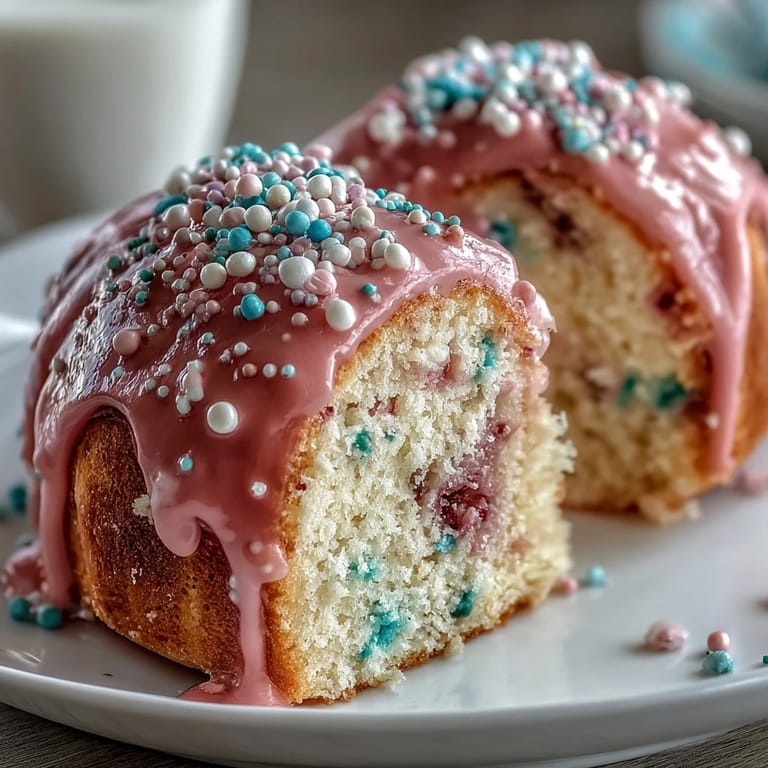
 My neighbor showed up at my door with a box of rainbow sprinkles she'd found at a vintage kitchen sale, insisting I had to make something worthy of them. That afternoon, I decided on a Funfetti cake—not the boxed kind from childhood, but a from-scratch version with real vanilla and a buttercream that could be whatever color I dreamed up. The moment those sprinkles hit the batter and caught the kitchen light, I knew this cake was going to be something special for the spring gathering I'd been planning.
I baked this cake the morning of my daughter's birthday brunch, and watching her friends' faces light up when they saw those pastel swirls was worth every minute of butter-beating. One guest actually gasped—just gasped—before taking a bite. That's when I realized this cake isn't just about flavor; it's about creating a moment of pure, unapologetic joy.
Ingredients
- All-purpose flour (2 1/2 cups): The foundation of tenderness; make sure it's fresh and measured by weight if possible, as it makes a real difference in crumb structure.
- Baking powder and baking soda (2 1/2 tsp and 1/2 tsp): This combination gives you lift and a subtle tang that balances the sweetness beautifully.
- Salt (1/2 tsp): Never skip it—salt amplifies vanilla flavor and keeps the sweetness from becoming cloying.
- Unsalted butter, room temperature (1 cup for cake, 1 1/2 cups for frosting): Room temperature is non-negotiable; cold butter won't cream properly and you'll end up with a dense cake.
- Granulated sugar (1 1/2 cups): This feeds the creaming process and creates the tender crumb you're after.
- Large eggs, room temperature (4): Cold eggs won't incorporate smoothly; let them sit out for 30 minutes before baking.
- Pure vanilla extract (2 tsp for cake, 2 tsp for frosting): Splurge on real vanilla—it's the soul of this cake and makes all the difference.
- Whole milk mixed with sour cream (1 cup milk, 1/2 cup sour cream): The sour cream adds richness and a subtle tang that keeps the cake moist and flavorful.
- Rainbow sprinkles—jimmies, not nonpareils (2/3 cup): Jimmies are thicker and hold their color better; nonpareils will bleed and turn your batter muddy.
- Powdered sugar, sifted (5 cups for frosting): Sift it first to remove lumps, or your frosting will have grainy bits that ruin the smooth texture.
- Food coloring gels in pastel shades: Gel colors are more vibrant and don't thin out your frosting like liquid colors do; they're worth seeking out.
Tired of Takeout? 🥡
Get 10 meals you can make faster than delivery arrives. Seriously.
One email. No spam. Unsubscribe anytime.
Instructions
- Set yourself up for success:
- Preheat your oven to 350°F (175°C) and grease both 9-inch round pans, then line them with parchment paper so your cakes slide out like a dream. Have all your ingredients measured and at room temperature before you begin—this is when baking becomes smooth and stress-free.
- Combine your dry ingredients:
- In a medium bowl, whisk together the flour, baking powder, baking soda, and salt until they're evenly distributed. This step ensures your leavening agents are spread throughout the batter, so you get even rise everywhere.
- Cream the butter and sugar:
- Beat them together in a large bowl for about 3 minutes until the mixture is pale, fluffy, and roughly doubles in volume. This is where you're incorporating air, which later becomes tender crumb—don't rush it.
- Add your eggs slowly:
- Drop in one egg at a time, beating well after each addition until it's fully incorporated before adding the next. This creates an emulsion that keeps your batter smooth and uniform.
- Stir in the vanilla:
- Add your vanilla extract and mix until it's completely combined. You'll notice the batter smells immediately deeper and more complex.
- Alternate your wet and dry ingredients:
- Add about a third of the flour mixture, then half the milk-sour cream mixture, then another third of flour, then the remaining milk mixture, and finally the last of the flour, beating briefly after each addition. Start and end with flour to ensure the batter stays emulsified and doesn't curdle.
- Fold in the sprinkles gently:
- Using a rubber spatula, fold in your rainbow sprinkles with a light hand so they stay evenly distributed and don't break. Take your time here—you want them scattered throughout, not crushed into the batter.
- Divide and smooth:
- Pour the batter evenly between your two prepared pans and use an offset spatula to smooth the tops so they bake evenly. If the tops are lumpy, the cakes will bake unevenly and look lopsided.
- Bake with patience:
- Bake for 28–32 minutes; your oven might run hot or cool, so start checking at 26 minutes with a toothpick. When it comes out clean or with just a few moist crumbs, you're done—don't overbake or your cake will dry out.
- Cool with care:
- Let the cakes cool in their pans for 10 minutes so they set slightly, then turn them out onto a wire rack to cool completely. Trying to frost a warm cake is a disaster—the frosting melts and slides everywhere.
- Prepare your frosting base:
- Beat the softened butter on medium speed for about 2 minutes until it's completely smooth and creamy. This is your canvas for color.
- Add powdered sugar gradually:
- Mix in the powdered sugar slowly on low speed so it doesn't cloud your kitchen in a white puff. Once it's mostly combined, turn the mixer up to medium and beat for another minute.
- Add your wet ingredients:
- Pour in the milk, vanilla extract, and a pinch of salt, then beat on high for 2–3 minutes until the frosting is light, fluffy, and increased in volume. This is what makes it spreadable and delicious.
- Divide and color:
- Scoop the frosting into four bowls, then add a small amount of each pastel gel color to a separate bowl. Start with just a tiny drop and mix thoroughly; gel is potent and you can always add more color, but you can't take it out.
- Decorate your masterpiece:
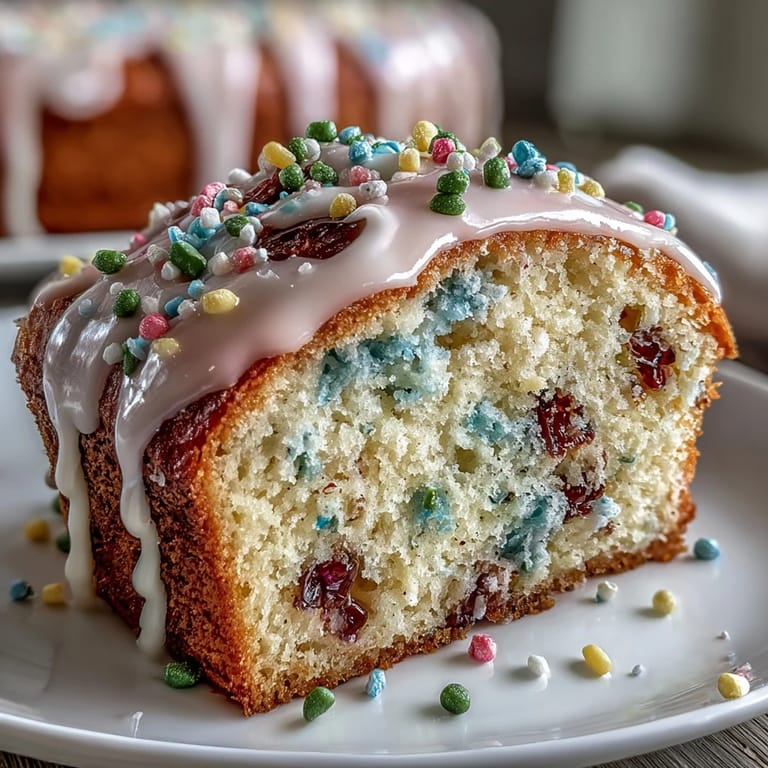
- Spread or pipe your colored frostings onto the cooled cake layers, swirling the colors together for a marbled pastel effect. Let your hands do what feels right—imperfection is part of the charm.
 Pin It
 There's something about watching someone blow out candles on a cake you made from scratch that shifts your whole perspective on the effort. When my cousin took that first bite and closed her eyes in genuine contentment, I understood that this cake wasn't about impressing anyone—it was about showing up with something made by my own hands that tasted like springtime and celebration.
The Secret to Tender Crumb
The magic isn't in any single ingredient but in how they work together—the sour cream adds moisture and tang, the eggs create structure, and the alternating method keeps everything emulsified. I used to add all the flour at once like an impatient baker, and my cakes were always slightly dense. When I slowed down and actually alternated the wet and dry ingredients, the texture completely changed. Now my cakes are pillowy and stay moist for days, which honestly feels like a small miracle in the baking world.
Playing with Color and Contrast
The pastel buttercream is where you get to be creative without any pressure—there's no wrong way to swirl four soft colors together on a cake. I've done it meticulously with piping bags and I've done it sloppily with an offset spatula, and honestly, the imperfect version often looks more charming. The key is committing to your colors; pale, washed-out colors feel half-hearted, while vibrant pastels feel intentional and joyful.
Make It Your Own
Once you master the basic cake and frosting, you have endless options for making it uniquely yours. The buttercream stays smooth and spreadable for hours, so you can decorate the cake in the morning and not worry about it melting. You can also bake this cake as cupcakes—just reduce the baking time to 22–24 minutes and pipe frosting on top instead of layering.
- Substitute Greek yogurt for the sour cream if you want something tangier and slightly less rich.
- If you don't have food coloring gels, use liquid food coloring, but add it drop by drop because it thins the frosting faster than gel does.
- Pair this cake with sparkling Moscato or fresh lemonade to echo the spring theme and let the vanilla shine.
 Pin It
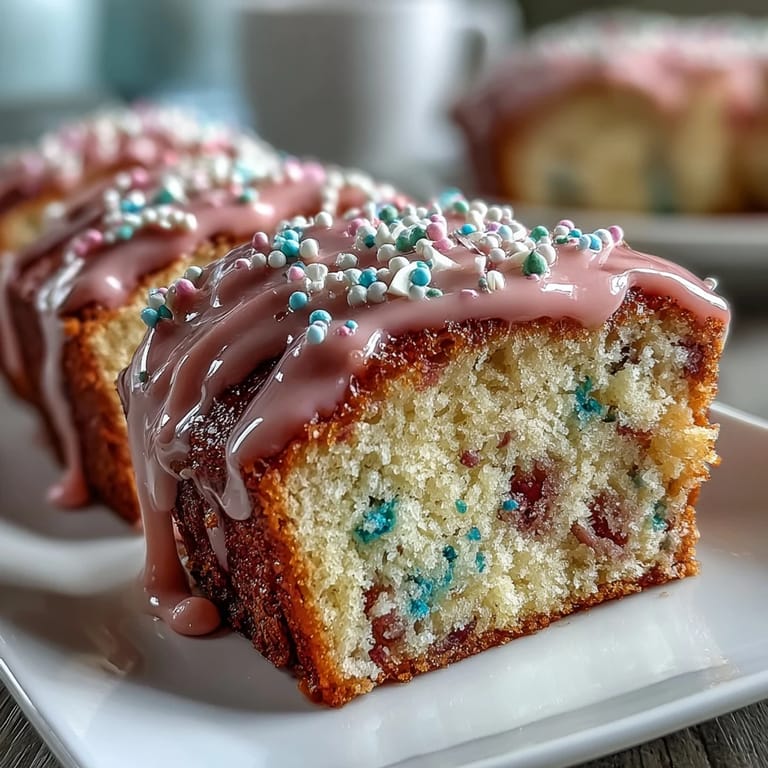
 This cake has become my go-to dessert for anyone celebrating something worth celebrating, because it's beautiful enough to feel special but approachable enough that you're not stressed in the kitchen. Make it once and you'll understand why—it's just really, really good.
Recipe FAQs
- → What gives the cake its colorful specks?
Rainbow jimmies are gently folded into the batter, adding bursts of color without melting during baking.
- → How is the pastel buttercream made?
Buttercream is made by whipping butter with powdered sugar, milk, vanilla, and a pinch of salt, then tinted with pastel food gels for a soft, colorful finish.
- → Can the sour cream be substituted?
Yes, Greek yogurt can be used as a substitute for sour cream without affecting the texture significantly.
- → What baking pans are recommended?
Two 9-inch round pans are ideal for evenly baking the cake layers to achieve proper rise and texture.
- → How long should the cake cool before frosting?
Allow the cake layers to cool completely on a wire rack, roughly 30 minutes, to ensure the buttercream applies smoothly.