 Pin It
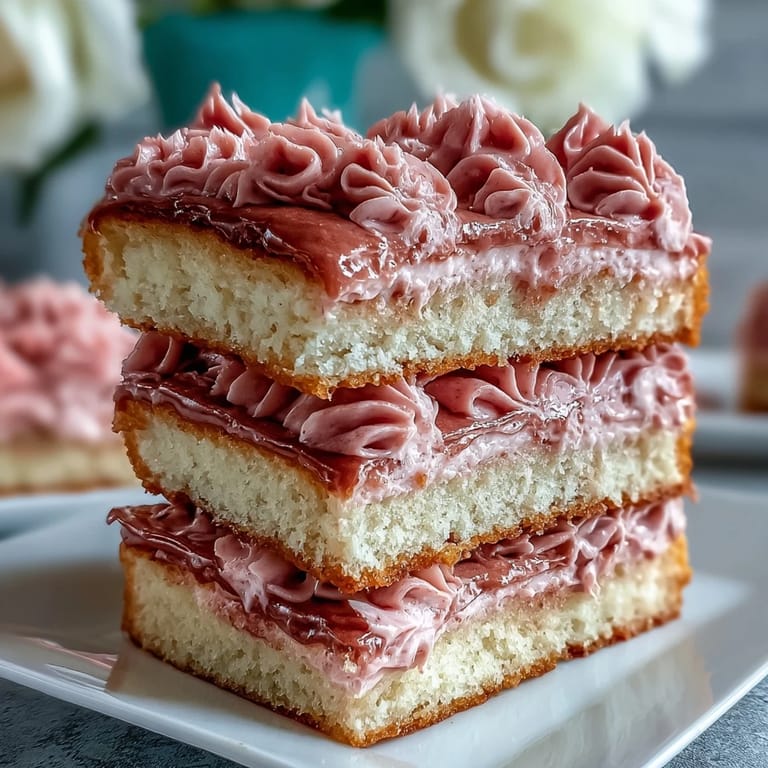
 I wasn't always a cake decorator, but one Easter morning, my niece asked if I could make something that looked like spring itself. That question sent me scrambling through the kitchen, experimenting with soft pinks and yellows, trying to recreate the exact moment when winter finally lets go. This ombre cake emerged from that happy accident, and somehow it became the dessert everyone asks for when warmth returns to the world.
I made this cake for my friend's baby shower last April, and watching her face when I set it on the table still makes me smile. The way the yellow melted into peach and then into pink seemed to capture exactly what she was feeling about the new season arriving with her daughter. Three people asked for the recipe before we'd even finished dessert.
Ingredients
- All-purpose flour (3 cups): The foundation of everything, and room-temperature ingredients make the biggest difference in how tender your layers turn out.
- Baking powder (2½ tsp): This is what gives you those light, feathery crumbs that make the cake feel almost weightless.
- Salt (½ tsp): Just a whisper of it, but it somehow makes the vanilla flavor sing louder than you'd expect.
- Unsalted butter (1 cup for batter, 1½ cups for frosting): Always unsalted so you control the seasoning, and let it soften on the counter until it yields to your finger.
- Granulated sugar (2 cups): This is where the moisture and structure live, beaten into butter until it looks like wet sand.
- Eggs (4 large ones): They need to be at room temperature or your batter will break and you'll end up with an uneven crumb.
- Pure vanilla extract (1 tbsp for cake, 2 tsp for frosting): Don't skip the quality here, because it's one of the few flavors people will consciously taste.
- Whole milk (1 cup): Room temperature is crucial because cold milk will seize up your butter mixture and ruin the emulsion.
- Gel food coloring in pink and yellow: Gel holds its color better than liquid food coloring and won't thin out your batter like the watery stuff does.
- Powdered sugar (5 cups, sifted): Sift it even if it seems tedious, because lumps will make your frosting gritty.
- Milk or heavy cream (3-4 tbsp for frosting): This adjusts the consistency so your frosting spreads like silk, not like drywall compound.
Tired of Takeout? 🥡
Get 10 meals you can make faster than delivery arrives. Seriously.
One email. No spam. Unsubscribe anytime.
Instructions
- Get your mise en place ready:
- Preheat your oven to 350°F and line three 8-inch cake pans with parchment paper that hangs slightly over the edges so you can lift the cooled cakes out without fighting them. Having everything measured and at room temperature before you start mixing makes the difference between a beautiful crumb and a dense, gummy cake.
- Make your dry mixture:
- Whisk flour, baking powder, and salt together in a medium bowl, breaking up any little clumps of baking powder as you go. This helps everything distribute evenly when you fold it into the wet ingredients.
- Cream your butter and sugar until it's fluffy:
- Beat them together on medium speed for about 3 to 4 minutes until it looks pale and airy, like soft clouds. This step is where you're incorporating air into the batter, and it's the secret to a tender, delicate cake.
- Add eggs one at a time like you mean it:
- Beat well after each egg goes in, making sure each one is fully incorporated before adding the next, then mix in your vanilla. If you rush this, your batter will look broken, but keep mixing and it will come back together.
- Alternate the dry and wet ingredients:
- Add a third of the flour mixture, then half the milk, then another third of the flour, then the rest of the milk, then the last of the flour, stirring just until combined. Overmixing at this stage makes the cake tough, so stop as soon as you don't see any streaks of flour.
- Divide and tint your batters:
- Split the batter evenly into three bowls and add just a tiny bit of pink gel coloring to one bowl and a tiny bit of yellow to another, leaving the third plain for a pale peach middle layer. Start with less color than you think you need because you can always add more, but you can't take it out.
- Pour into pans and bake:
- Divide each colored batter into its matching prepared pan, smooth the tops with a spatula, and bake for 22 to 26 minutes until a toothpick comes out clean. Your kitchen will smell so good that you won't want to leave the door of the oven.
- Cool with patience:
- Let the cakes rest in their pans for 10 minutes, then turn them out onto wire racks to cool completely at room temperature. This prevents them from cracking or breaking apart when you handle them.
- Make your buttercream frosting:
- Beat softened butter on medium-high speed until it's creamy and pale, then gradually add your sifted powdered sugar and vanilla, mixing until it's light and fluffy. Add milk or cream one tablespoon at a time until you get the perfect consistency, neither too thick nor too thin.
- Tint your frosting to match:
- Divide the buttercream into three bowls and add pastel pink coloring to one, pale yellow to another, and leave the third plain. Use the same gentle hand with the gel coloring that you did with the cake batters.
- Stack and frost with intention:
- Place your yellow cake layer on a serving plate or cake board, spread a layer of yellow frosting on top, then add your peach or plain layer and frost it with the plain frosting. Top with your pink layer and frost the top with pink buttercream.
- Create the ombre gradient on the sides:
- Use your remaining frosting to cover the sides of the cake, starting with yellow at the base and blending it into peach, then gradually into pink as you move toward the top. Use an offset spatula or cake scraper to smooth and blend the colors, creating a dreamy transition that looks intentional and effortless.
- Finish and chill:
- Decorate the top with pastel sprinkles, edible flowers, or whatever makes your heart happy, then refrigerate for at least 30 minutes before slicing. Cold cake cuts so much cleaner and the layers stay exactly where you put them.
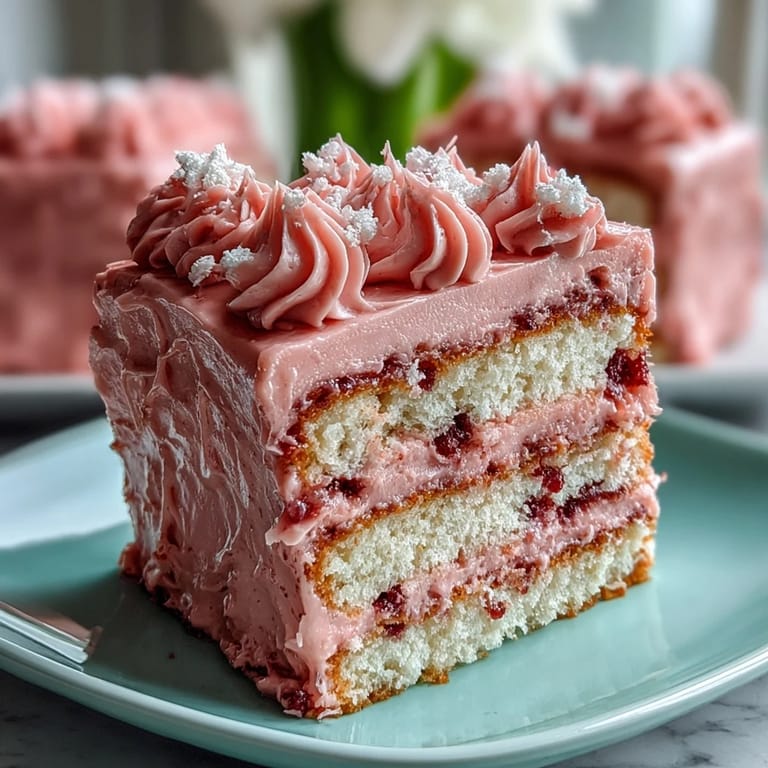 Pin It
 The first time someone took a photo of this cake before eating it, I realized it had become more than just dessert. It was a moment, a memory, something worth capturing and sharing because it made people slow down and appreciate the fact that springtime and celebration had arrived.
The Science Behind the Softness
There's a reason this cake feels almost weightless on your tongue. The creaming method you use when you beat butter and sugar together incorporates hundreds of tiny air bubbles that expand during baking, creating a crumb that's tender and open rather than dense. The baking powder works with those air bubbles, helping them multiply so your cake rises gently and evenly. I learned this the hard way when I once skipped the creaming step to save time and ended up with a cake that felt more like a hockey puck than something worth celebrating.
Color Blending Techniques That Actually Work
The most common mistake people make with ombre cakes is trying too hard to create harsh lines between the colors. Instead, think of it as a slow conversation between one shade and the next. I use an offset spatula to gently swirl and blend the frosting where the colors meet, letting them mingle without forcing them. If you work quickly while the frosting is soft, the blending happens almost naturally, and the result looks way more sophisticated than if you tried to create a perfect gradient with a stencil.
Making It Your Own
This cake is a blank canvas that's begging for your personal touch, and I've learned that the best versions come when bakers adapt it to what they love. Some people use buttermilk instead of regular milk for a tang that brightens the vanilla, while others add lemon zest to the batter for a whisper of spring flavor. The colors are entirely up to you too; I've made this cake in soft blues and purples, in peach and coral, even in pale green and white for a botanical wedding. The magic isn't in following the recipe exactly, it's in understanding the basic framework and then playing with it until it feels like yours.
- If you want more vibrant colors, add a bit more gel food coloring to your batters and frostings, testing as you go.
- Consider crumb-coating your cake first with a thin layer of frosting, chilling it, and then adding your final frosting layer for a more polished, professional-looking finish.
- Store your finished cake in a cool place away from sunlight so the colors stay as beautiful as they were when you frosted it.
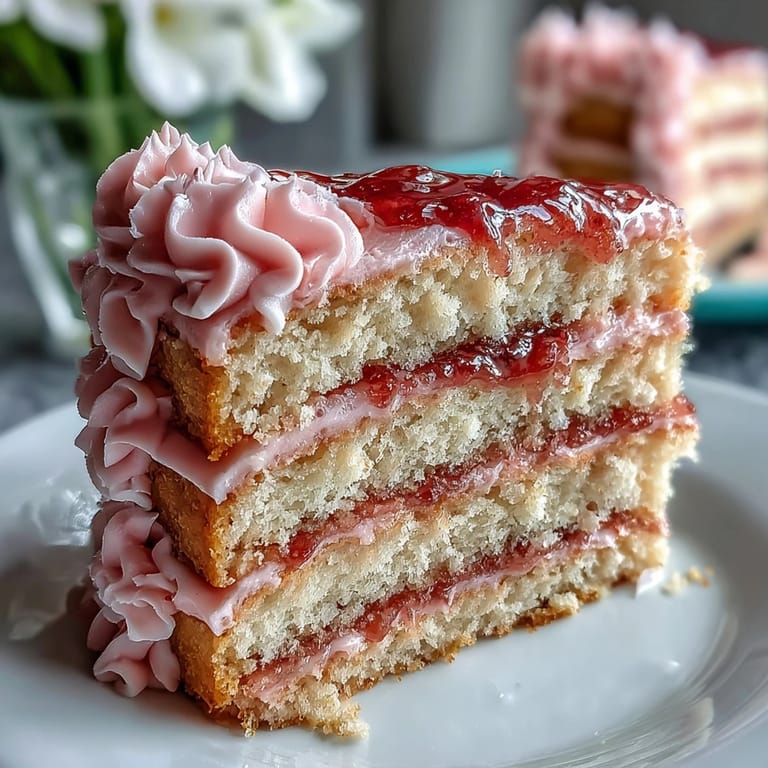 Pin It
 This cake will sit on a table and draw people in before they even know what they're looking at. There's something about spring colors and soft layers that makes people believe in celebrating the small, beautiful moments.
Recipe FAQs
- → How do I achieve the ombre effect in the sponge layers?
Divide the batter into three portions and tint each with varying amounts of pink and yellow gel food coloring to create the gradual color transition.
- → What is the best way to frost the cake for smooth gradients?
Use separate bowls of buttercream tinted in pastel pink, yellow, and plain. Apply each color to the sides and blend carefully with a scraper or spatula for a seamless ombre finish.
- → Can I prepare this layered sponge in advance?
Yes. Bake and cool the layers ahead of time. Store them covered at room temperature for one day or refrigerate up to four days before assembling and frosting.
- → What tools are necessary for assembling and decorating this sponge?
Three 8-inch round pans, mixing bowls, electric mixer, offset spatula, cake scraper, parchment paper, and wire racks are recommended for best results.
- → Are there any common allergens in this layered sponge?
Yes, it contains wheat (gluten), eggs, and dairy from milk and butter. Be sure to check all coloring and decoration ingredients for additional allergens.